
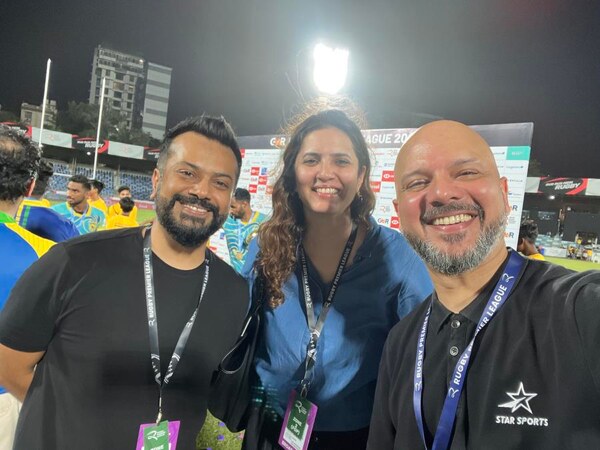
Prashant Khanna leads production services, studios and production technology for sports and live experiences at JioStar. He explains how India’s fan-first approach to broadcasting works at a scale few markets can imagine, and why the industry must treat change as constant.
India’s sports broadcasting operates at extraordinary scale. JioStar’s OTT platform has over 300 million subscribers, and an event like the IPL can draw close to 1.19 billion viewers.
Prashant Khanna sits at the heart of how that content is produced. We asked him what makes India’s approach different, which innovations the rest of the world should watch, and the one change he’d like to see across the industry.

Fan-first, not tech-first
Traditional models, Prashant says, tend to build first and then take the product to the consumer. JioStar does it the other way round: listen to viewers, understand their feedback, then build the tools, platforms and innovations that reach them the way they prefer.
“We don’t adopt technology simply because it exists, but because it either enhances our workflow or creates a significant impact from a consumer perspective.”
Innovations worth watching
Prashant believes everyone in sport is largely trying to solve the same challenges, often in silos. The core question is how to capture limited viewer attention and serve different cohorts: younger audiences, female audiences, core fans and casual viewers. JioStar’s answers include:
- Multilingual coverage: key marquee productions broadcast in more than 12 languages.
- Vertical production for cricket: a first of its kind, designed as a complementary viewing experience rather than a replacement.
- Remote production: run for seven to eight years across the UK, Australia, New Zealand, the US, the West Indies and India.
- Inclusive broadcasting: IPL and World Cup games produced in sign language, with descriptive commentary for visually impaired viewers.
As custodians of sports businesses that reach millions of fans, he says, broadcasters should collaborate to understand what is a challenge or an opportunity in one market versus another, and solve problems together.

Why Australia matters
JioStar’s innovation and incubation hub, Star Lab, has a long-standing strategic partnership with STWS, built around discovering scalable innovations and connecting with companies large and small.
Prashant rates Australia as extremely advanced and progressive in sports technology, infrastructure and viewership, with a sporting culture he describes as phenomenal. For a broadcaster deeply connected to Australian cricket, showing up in person matters.
Make change continuous
Asked for the one systematic change he’d like to see, Prashant’s answer is a mindset rather than a technology.
“The one change we’d like to see is the industry embracing constant change as the norm. There’s no one-size-fits-all approach, and complacency is not an option in the business we’re in.”
With disruption across viewing experiences, production methods and the democratisation of content, to the point that phones now feature in professional production workflows, he argues that change can’t be a periodic exercise. Treating it as continuous keeps organisations agile and drives collaboration and shared progress.
Key takeaways
- Start with the viewer: adopt technology only where it improves workflow or the fan experience.
- Serve distinct audience cohorts, from languages to formats like vertical video.
- Accessibility at scale is achievable: sign language and descriptive commentary on marquee events.
- Treat change as continuous, not periodic, and collaborate across markets.
About Prashant Khanna
Prashant Khanna is Head of Production Services, Studios & Production Tech for Sports & Live Experiences at JioStar. Through Star Lab, JioStar is a long-standing strategic partner of STWS. Prashant has been a presenter at STWS events, and we’re grateful for his contribution to our program and community.
About STWS
STWS (Sports Tech World Series) is the global community for people at the intersection of sports, digital and technology. Founded in Melbourne in 2015, STWS delivers Australia Sports Innovation Week, alongside advisory services, the Sports Investor Network and industry content including the Sports Tech Annual.
Want more insights like this? Subscribe to the STWS newsletter